Vladimír Kokolia: Dogma
27 Nov 2026 – 21 Mar 2027

We’re open to all, now also you
DOX Centre for Contemporary Art
Poupětova 1, Praha 7
Show on the map
The exhibition opening will take place on November 26, 2026, at 7 p.m.
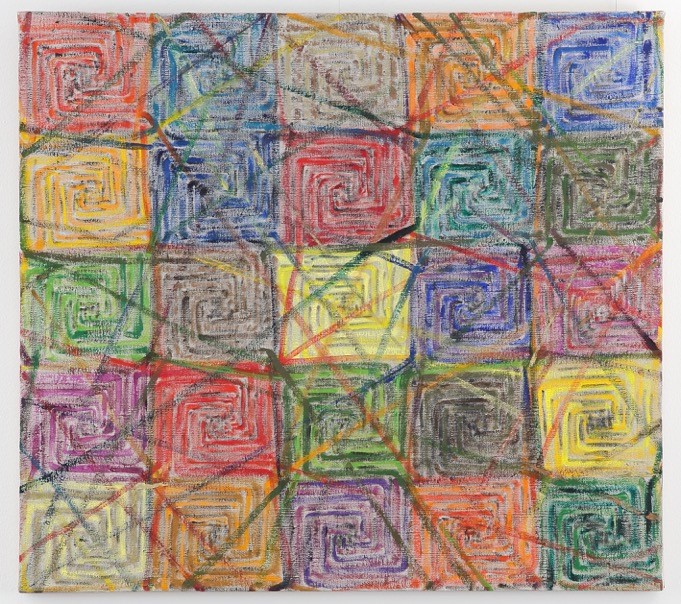
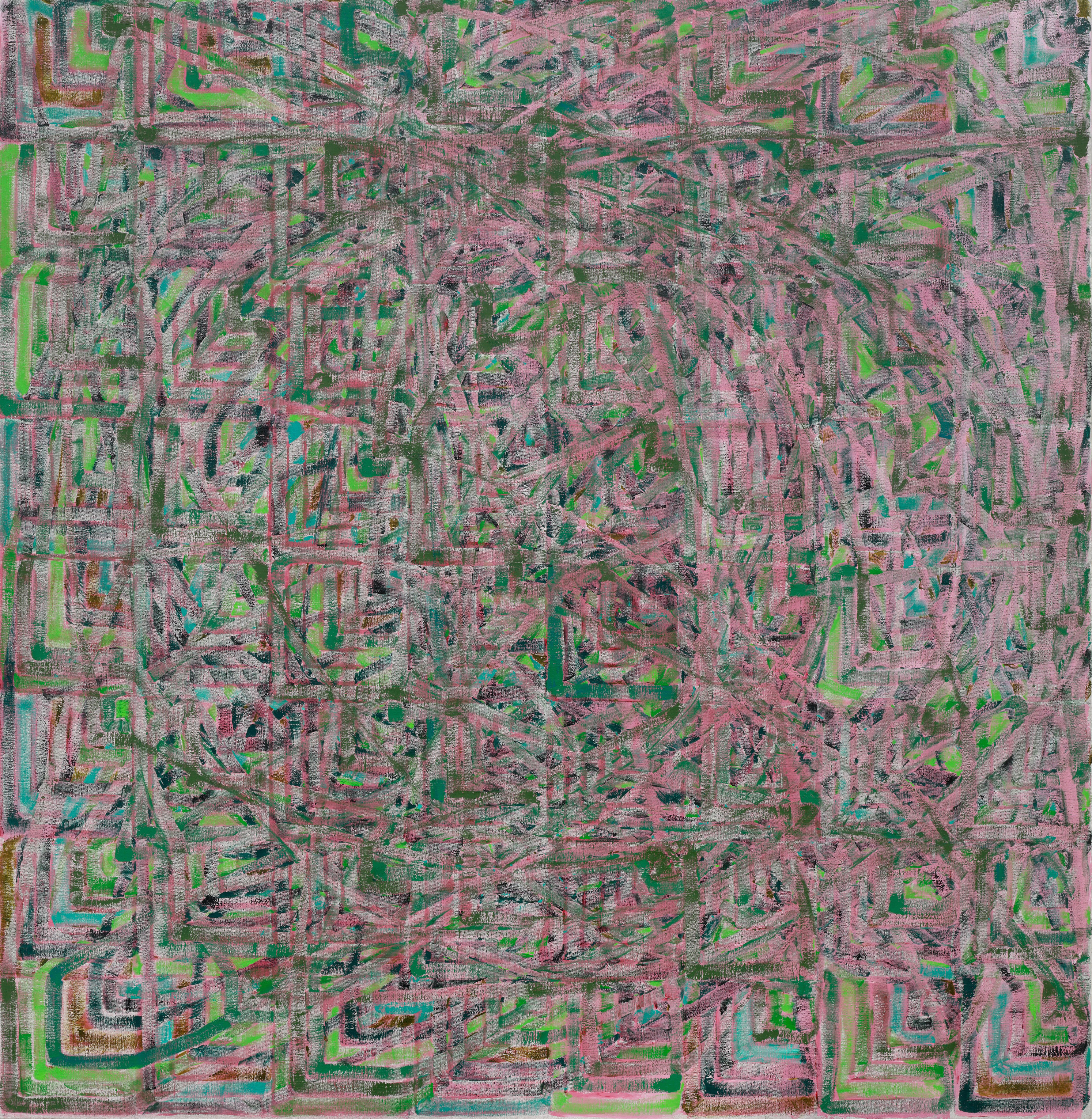
In his exhibition Dogma, Vladimír Kokolia presents visitors with paintings as well as rules on how to paint them and how to view them. They are “carved” into the walls of DOX like the Code of Hammurabi, for Kokolia’s dogmas are not merely one possible way of understanding painting and paintings – they are the personal tenets of an artist who has discovered on his journey that possibilities must be narrowed down. Rather than wings they are a burden, and they must be cast off like stones until all that remains is something that is not a choice but rather the only possibility.
Kokolia’s dogmas are reminiscent to old treatises on painting, in which a master teaches a pupil how to paint and understand art. Perhaps the best-known example is Leonardo da Vinci’s Treatise on Painting, but Kokolia’s maxims are more akin to the seventeenth-century Chinese text Friar Bitter-Melon on Painting. Shih-t’ao (for Bitter-Melon was his monastic name) taught his students, for example, that perception which comes only after knowledge is not true perception, and he urged them to revere perceptiveness. Kokolia undoubtedly gave his pupils similar instructions, and in this exhibition he demands that the viewer truly look at the painting and nothing else, that they perceive the painting without thinking of their prior experience or knowledge, that they view the painting without prejudice – or, as Shih-t’ao put it, with an uncontaminated mind.
It is therefore up to the visitor whether they will simply skim Kokolia’s dogmas out of the corner of their eye or actually read them, whether they will merely glance at the paintings or truly see them.
After completing his studies, Vladimír Kokolia devoted himself to drawing and printmaking (the drawings from his Big Cycle gained considerable recognition both at home and abroad in the 1980s). He was the frontman of the cult Brno band E as well as the author of their lyrics (for which he won the Jiří Orten Award in 1986); he also devoted himself to literature and published several books of his own. He practised Chen-style tai chi intensively (later becoming a personal pupil of Master Zhu Tiancai). He also organised lectures, workshops, public discussions, and performances. In 1990 he became the first recipient of the Jindřich Chalupecký Award, and in 1992 he was selected for the international contemporary art exhibition documenta IX. He has had dozens of exhibitions both in the Czech Republic and abroad. He created many opportunities for himself to succeed in various artistic fields, expressing himself through various media other than just painting. Eventually, however, he saw but one clear, necessary, and indisputable path: to focus on “the painting”. Kokoli’s paintings can be understood as autonomous works which, however, do not represent a return to the abstract painting of the 1910s, nor to post-war American abstraction. They are distinctive and defy categorisation.
Curator: Milena Slavická
Vladimír Kokolia (1956) studied painting under Jan Smetana at the Academy of Fine Arts in Prague. In 1984 he began practising Chen-style tai chi. From 1984 to 1997 he was the frontman of the band E, which was active on the Czech experimental and underground scene. In 1990 he won the Jindřich Chalupecký Award, which included a residency at the Headlands Center for the Arts in San Francisco. In 1992 he was invited to exhibit at documenta IX in Kassel, Germany. His work has been presented in numerous exhibitions both in the Czech Republic (e.g., Mánes Gallery, Prague; House of Arts Brno) and abroad (e.g., Ikon Gallery, Birmingham, United Kingdom; MoMA Chengdu, China; Taipei Fine Arts Museum, Taiwan; Shcherbenko Art Centre, Kyiv, Ukraine). From 1992 to 2026 he led the studio Printmaking 2 at the Academy of Fine Arts in Prague. In his teaching practice he placed emphasis on the perception of reality and the “reality of the image”. Many of his students went on to become renowned artists, and in 2012 he received the Dalibor Chatrný Award, which is presented to prominent figures in Czech art who have shaped new generations of artists. His works are held in the collections of major institutions such as S.M.A.K. in Ghent, the Albertina Museum in Vienna, and the National Gallery in Prague, among others.
Keep exploring
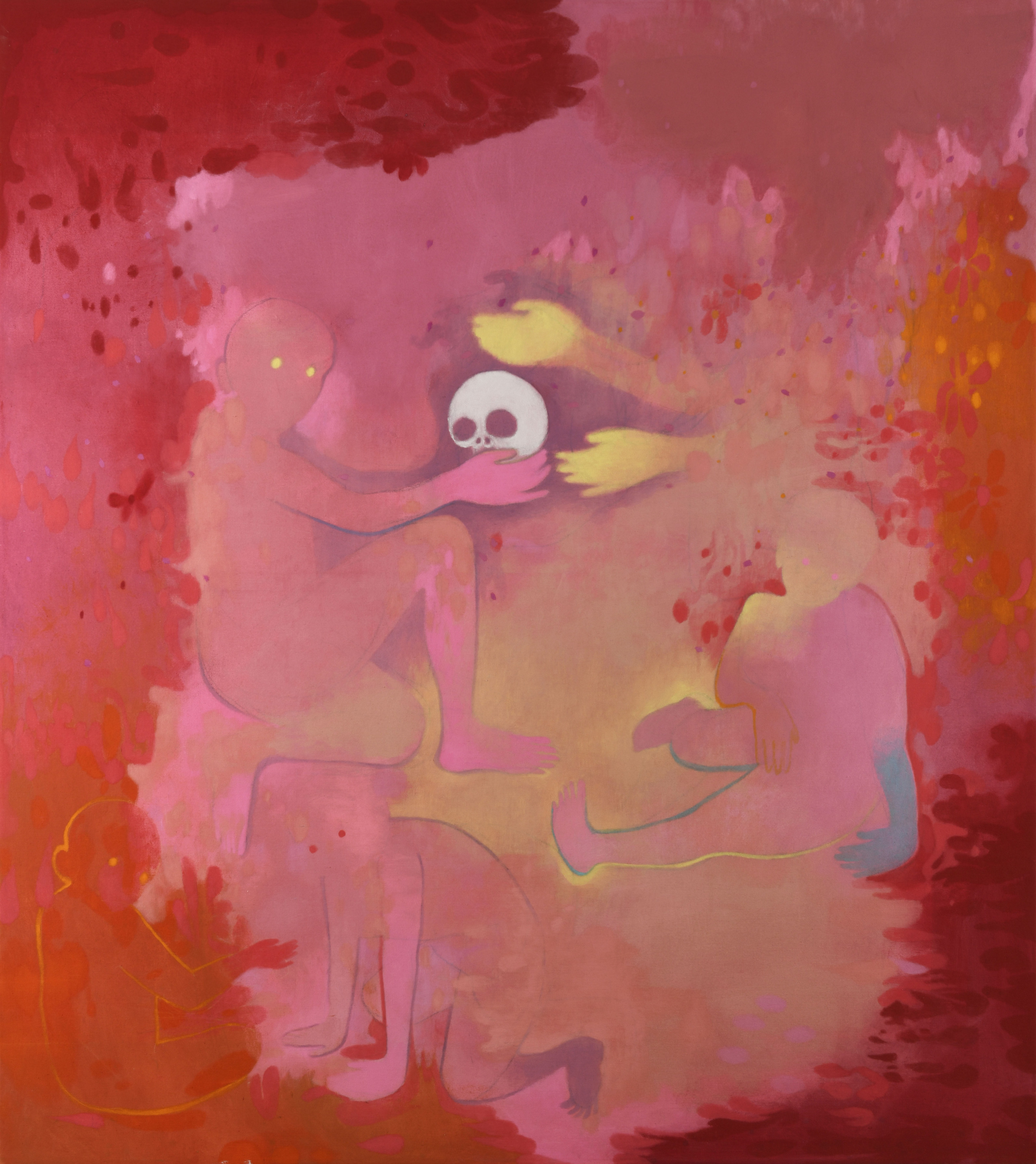
Radka Bodzewicz: FAUST
Radka Bodzewicz has long drawn inspiration from literary sources – from poetry, prose, and even scholarly or philosophical texts. The FAUST exhibition offers an artistic reflection on another iconic literary work, Goethe’s Faust.

ANDROS
The ANDROS group exhibition explores artistic depictions of the male body within the broader regional context, presenting works by artists from Germany, Austria, and the Visegrad countries alongside those of Czech artists.

Argus & Medusa: On Hope in Dark Times
The Argus & Medusa exhibition shows how the work The Raft of the Medusa (1818–1819) by the French artist Théodore Géricault sparks the imagination of contemporary visual artists, thus reflecting the reality of today’s world. A moment between hope and despair.

David Tibet: Hallucinate, Children
An exhibition showcasing the visual work spanning the entire career of one of the most prominent figures in the esoteric and experimental underground scene of recent decades, David Tibet.

Point of View 4: Resilience
The fourth instalment of the long-term project Point of View once again presents an exhibition and a classroom in one. The artistic approaches here open up a space to slow down and pay attention – a space for shared experience. They allow us to linger with uncertainty, to think and feel at the same time, and to seek strength in fragility.

Anna Polanská & Pavla Vachunová: Before the Stone Blooms
The exhibition Before the Stone Blooms at the DOX by Qubus design shop brings together the work of Anna Polanská and Pavla Vachunová, two artists whose paths converge in their intuitive relationship with materials, craftsmanship and the landscape.

Field of Memory
A multimedia exhibition produced by the Kyiv-based Dakh Theatre uncovers the tragedy of Ukrainian children separated from their homes and families during the ongoing war against the Russian aggressors. It is part of the Prague Crossroads Festival.
Vladimír Kokolia: Dogma
The exhibition Dogma presents paintings by Vladimír Kokolia and offers different ways of looking at them. It also provides insight into what painting is about, the challenges a painter must take on, and the demands they must meet.